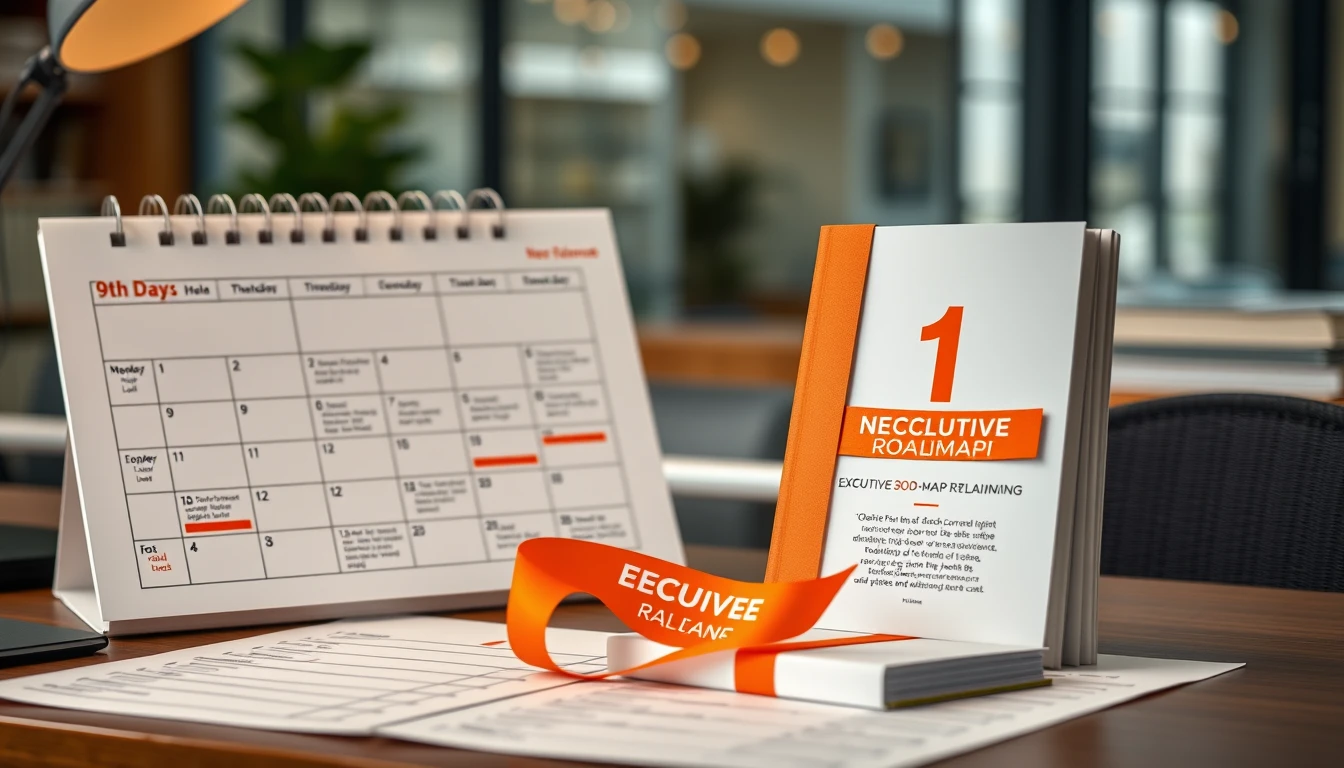
The Fast Rule: The 90-Day Book Launch Formula
A high-converting non-fiction book launch follows a 3-phase chronological sequence: Phase 1 (Days 90–61) focuses on final interior typeset, cover 3D assets, and locking the top 3 low-competition Amazon categories. Phase 2 (Days 60–15) focuses on recruiting 25–50 Advance Reader Copy (ARC) reviewers and warming up your email list with excerpt teasers. Phase 3 (Days 14–0) concentrates on launch-day pricing promotions ($0.99 Kindle / $14.99 Paperback), driving 50–100 verified sales in 48 hours to trigger the Amazon Best Seller algorithm.
The Fast Rule: The 90-Day Book Launch Formula
A high-converting non-fiction book launch follows a 3-phase chronological sequence: Phase 1 (Days 90–61) focuses on final interior typeset, cover 3D assets, and locking the top 3 low-competition Amazon categories. Phase 2 (Days 60–15) focuses on recruiting 25–50 Advance Reader Copy (ARC) reviewers and warming up your email list with excerpt teasers. Phase 3 (Days 14–0) concentrates on launch-day pricing promotions ($0.99 Kindle / $14.99 Paperback), driving 50–100 verified sales in 48 hours to trigger the Amazon Best Seller algorithm.
- ✓ Days 90–61: Finalize PDF/X-1a interior, lock 3 BISAC categories, and prepare 5-module A+ Content.
- ✓ Days 60–15: Distribute digital ARCs to 30–50 targeted peers with an explicit review commitment deadline.
- ✓ Launch Week: Run a $0.99 Kindle countdown promotion to generate 75+ downloads, driving the #1 New Release orange banner.
The Anatomy of a Modern Book Launch: Audience, Momentum, and Algorithms
The Anatomy of a Modern Book Launch: Audience, Momentum, and Algorithms
Most non-fiction authors spend 12 months writing and 0 days planning distribution. They finish the manuscript, upload a PDF to KDP, post once on LinkedIn, and wait. Six weeks later, they have 14 sales—11 from their mom's bridge club—and a rank somewhere near #840,000 in Books.
This is not a writing problem. It's a systems problem. A book launch is a logistics operation, and the non fiction book launch checklist 90 days out looks nothing like the publishing advice from 2012.
Amazon Doesn't Read Your Book. It Reads Your Metrics.
The A9 recommendation engine (now folded into Amazon's unified ranking infrastructure) does not evaluate prose quality, chapter structure, or whether your argument holds. It measures two variables above all others:
- Sales velocity — units moved per rolling 72-hour window
- Conversion rate — sessions-to-purchase percentage on your detail page
Amazon samples these signals continuously. Hit a velocity spike, and the algorithm tests your book in front of a wider audience. Sustain it, and you earn placement in "Customers who bought this also bought" carousels and category bestseller lists—including the #1 New Release badge, which is awarded by first-30-day sales rank within a subcategory.
Miss the window, and the test fails silently. Your book stays indexed but invisible. No penalty, no notification, just permanent obscurity.
Why Week 1 Decides Week 52
The organic recommendation engine is a flywheel. Early velocity triggers impressions. Impressions create sessions. Sessions convert at your page's rate. Conversions generate sales, which feed velocity again.
Break the chain anywhere and the wheel stops. This is why the 90-day launch exists: to engineer every link before the first copy moves.
Concrete math for a mid-list non-fiction title:
| Metric | Target | Why It Matters |
|---|---|---|
| Launch-week sales | 250–500 units | Triggers category bestseller testing |
| Detail page conversion | 8–12% | Below 5% kills algorithmic testing |
| Review count (day 30) | 40+ | Social proof lifts conversion 2–4 points |
| Ad spend efficiency | $0.80–$1.40 CPC | Keeps velocity affordable |
Every number above is a deliverable, not a hope. That's the distinction between a launch and a lottery ticket.
The Asset Stack Most Authors Skip
A functional launch requires roughly 34 discrete assets: cover files at 3 trim sizes, EPUB 3 and print-ready PDF/X-1a interiors, A+ Content modules, 7 back-end keywords, 3 category selections, an author central page, a landing page, 12 email sequence emails, 30 social posts, 5 ad creatives, and a review-team onboarding doc.
Authors typically build 4 of these. Then they wonder why the algorithm ignores them.
This is where BooklierAi collapses the timeline. The studio generates the full asset stack—typeset 6x9" print interiors with calculated gutter margins, reflowable EPUB 3 files, spine wrap calculations, A+ modules, and launch copy—from raw notes or voice memos. What used to consume 90 days of production now takes days, freeing the entire quarter for the part that actually moves rank: audience assembly and momentum scheduling.
You keep 100% royalty ownership. You don't wait on a designer's queue. You don't discover your gutter is 0.125" short after 200 proof copies ship.
Momentum Is Manufactured, Not Discovered
The 90-day window is not about writing faster. It's about sequencing: build the audience before the book exists, stack the assets before launch week, and concentrate every sale into a 7-day velocity event that the algorithm cannot ignore.
Get the sequencing right and Amazon does your marketing. Get it wrong and you do all the marketing yourself—forever, one LinkedIn post at a time.
Launch Your Bestselling Book in Days, Not Months
Stop delaying your book launch by 6 months while waiting for freelance formatters and cover designers. BooklierAi builds store-ready paperbacks, ePubs, and Amazon launch kits in minutes.
Phase 1 (Days 90–61): Asset Readiness, Preflight, and Category Lock
Phase 1 (Days 90–61): Asset Readiness, Preflight, and Category Lock
Ninety days out, you are not marketing. You are manufacturing. Every hour spent here saves four hours of panic in Week 2, when a KDP rejection email can cost you a launch window you cannot get back. Phase 1 produces three finished assets and one strategic decision.
Days 90–81: Interior Typesetting and PDF/X-1a Export
Set your trim at 6" x 9". For a book between 150 and 400 pages, that means a 0.75" outside margin, 0.85" top and bottom, and a 0.8" gutter (inner) margin. Mirror your running headers: even pages carry the book title, odd pages carry the chapter name. KDP rejects non-mirrored headers on print interiors roughly 30% of the time, and every rejection burns 24–48 hours.
Export to PDF/X-1a:2001 with all fonts embedded and no transparency layers. Check three things before upload:
- Page count divisible by 2 (odd page counts trigger blank-page insertion and shift your spine math).
- No live hyperlinks or RGB color in the body text.
- Bleed set to 0.125" on all four sides if any image touches the trim edge.
Run KDP's Print Previewer. It flags gutter violations and low-resolution images at 300 DPI minimum. Fix them now, not at 11 p.m. on launch eve.
Days 80–71: Full-Wrap Cover and Spine Math
Spine width is not a guess. It is a formula:
Cream paper caliper = 0.002252"
White paper caliper = 0.0025"
Example: 280-page book, cream paper
(280 ÷ 2) × 0.002252 = 0.3152" spine
Add 0.06" total for KDP tolerance = 0.375" safe spine
Build your full-wrap cover at 12.44" x 9.25" (front + spine + back + 0.125" bleed on all sides) for a 6" x 9" trim. Leave a 2" x 1.2" clear zone in the lower-right of the back cover for the barcode. Anything printed there gets covered by a white sticker. Designers forget this constantly.
Days 70–61: Category Scouting and the ABSR Threshold
Amazon lets you pick 3 categories. Most authors pick three broad ones and never rank. Instead, audit the category tree and find subcategories where the #1 title holds an ABSR above 10,000. That ranking signals fewer than 15–20 daily sales to hold the top slot.
| Subcategory Type | Typical #1 ABSR | Daily Sales for #1 | Verdict |
|---|---|---|---|
| Business & Money > Marketing | 400–2,000 | 80+ | Avoid |
| Small Business > Marketing | 8,000–25,000 | 12–18 | Target |
| Industries > Retail | 15,000–60,000 | 4–10 | Target |
Lock your three picks by Day 61. Write them into your KDP metadata file with exact category node names, since Amazon's tree changes and you want a paper trail.
Days 61–60: Build the A+ Content Stack
A+ Content lifts conversion 3–10% on average, and it is free. Draft all five modules before launch so approval (usually 24–72 hours) does not delay you:
- Hook banner — 970 x 600 px, one promise, one proof point.
- Framework diagram — your book's method in one visual.
- 3D spread mockup — flat cover plus an open interior page.
- Author bio — 60 words max, credential first.
- Comparison table — your book versus two competing titles, three differentiators.
Miss this checkpoint and Phase 2 compresses badly. Hit it, and the next 30 days are pure positioning.

Phase 2 (Days 60–15): The 50-Person ARC Team and Email Warmup Protocol
Phase 2 (Days 60–15): The 50-Person ARC Team and Email Warmup Protocol
Phase 1 gave you a clean manuscript. Phase 2 gives you reviews before launch day and an email list that actually opens your messages. Two tracks run in parallel: ARC recruitment (Days 60–30) and audience warmup (Days 45–15). Miss either one and your launch lands flat.
Build the ARC Team: 30 to 50 Readers, Not 500
Forget the fantasy of a 500-person launch team. Fifty committed readers outperform five hundred passive downloaders every time. Amazon's review conversion on a warm ARC list runs roughly 40–60% when you personally know the reader. On a cold list, expect 5–8%. Do the math: 50 engaged readers at 50% conversion gives you 25 day-one reviews. That's enough to trigger Amazon's algorithmic shelf placement.
Recruit from four pools:
- Peer authors in your genre (10–15) — they understand the favor economy and review fast.
- Colleagues and clients (10–15) — people who've seen you work and trust your expertise.
- Email subscribers who've replied to a newsletter in the last 90 days (10–15) — these are your superfans.
- LinkedIn and podcast guests (5–10) — high-credibility reviewers with public platforms.
Send personal invitations. No mass BCC. A one-line personal note referencing how you know them converts 3x better than a generic form email.
The Commitment Email Framework
Amazon's Terms of Service prohibit incentivized reviews. You cannot pay, gift, or trade for a review. What you can do is give a free copy with no strings and ask for an honest review if the book earns it. That distinction matters legally and ethically. Use this structure:
Subject: Free copy of [Book Title] — want one?
Hi [Name],
I'm launching my book on [exact date]. I'm giving 50 people an advance copy two weeks before it goes live. No obligation — if it's not for you, that's fine. If it is, I'd love an honest review on Amazon during launch week. That's the only ask.
Reply "send it" and I'll drop the file in your inbox.
Note the phrasing: "honest review," "no obligation," "if it's not for you, that's fine." This satisfies Amazon's guidelines and filters out non-reviewers. Roughly 60% of recipients reply. Of those, 70% actually review.
ARC Distribution: Watermark, Deadline, Track
Distribute via BookFunnel, StoryOrigin, or a private Google Drive folder. Every file gets a unique watermark — reader's email embedded in the footer of the ePub and PDF. This deters leaks and lets you trace piracy back to the source.
| Deliverable | Format | Send Date |
|---|---|---|
| ARC file + welcome note | Watermarked ePub + PDF | Day 30 |
| Review reminder | Plain email | Day 7 before launch |
| Day-one review link | Direct Amazon URL | Launch morning, 7 AM ET |
Set the explicit review target date in the welcome note: "Post your review on [launch date] between 7 AM and noon Eastern." Specificity drives action. Vague asks get ignored.
Audience Warmup: Three Emails, Three Jobs
Your broader email list needs priming too. Send three pre-launch emails, spaced 10 days apart, starting Day 45.
- Day 45 — The Origin Story. Why you wrote the book. One specific moment that triggered it. No pitch. Just narrative. Goal: emotional investment.
- Day 35 — The Core Framework Teaser. Share one chapter's central idea in 200 words. Give the reader a genuine takeaway they can use today. Goal: prove the book delivers value.
- Day 25 — The Cover Reveal. Show the cover. Include the launch date and a one-click "notify me" link to your launch page. Goal: build anticipation and capture intent.
Track open rates. Anything under 25% means your subject lines are weak or your list is cold. Clean inactive subscribers at Day 20 — a smaller engaged list beats a bloated dead one.
By Day 15, you should have 50 ARCs distributed, 3 warmup emails delivered, and a launch page collecting emails. Phase 3 turns all of that into rank.
Phase 3 (Days 14–0): The Launch Week Sales Velocity Sprint
Phase 3 (Days 14–0): The Launch Week Sales Velocity Sprint
The final two weeks are not for writing. They are for manufacturing velocity. Amazon's algorithm reads sales rank movement in 24-hour windows, so your job is to compress as much buying activity as possible into the narrowest possible timeframe.
Day 14: The Silent Soft Launch
Publish the paperback and Kindle editions with zero announcement. This is a mechanical step, not a marketing one. Your goal is page synchronization: Amazon needs 24–72 hours to link the paperback and Kindle editions under a single product page. If you launch loudly on Day 0 without this link, you split your reviews across two listings and lose the "also available in" cross-sell.
Use these 14 days to fix what the algorithm punishes:
- Metadata gaps: Confirm all 7 backend keyword slots are filled, both BISAC categories are correct, and the A+ Content module renders on mobile.
- Look Inside: Verify the first 10% renders cleanly. A broken preview kills conversion at 3–5%.
- Editorial reviews: Upload any trade quotes to the Editorial Reviews section. This is the only place Amazon lets you place third-party credibility above the fold.
Gutter check: For a 6x9" paperback at 250–400 pages, your inside margin must be at least 0.75" (0.875" for 400+ pages). Amazon's print rejection rate spikes on gutter errors, and a rejected proof resets your timeline by 5 days.
Day 3: Activate the ARC Team
Send your advance reader team the live link. Be surgical about the ask. Request a verified purchase review within 72 hours, because reviews posted before Day 0 carry no launch-day weight and reviews from non-purchasers get flagged.
Give them the exact phrasing constraints: 50+ words, specific chapter reference, no spoilers. Generic five-star reviews ("Loved it!") get suppressed. Specific ones survive.
Day 0: Launch Day Execution
Price the Kindle at $0.99 for 72 hours and the paperback at a 20–25% discount. You are buying rank, not margin. At $0.99, a 70% royalty nets you $0.35 per unit — irrelevant. What matters is the sales rank velocity that triggers Amazon's "customers also bought" carousel.
Sequence the announcements by hour:
- 6:00 AM EST: Email list (highest conversion window; inbox placement beats social by 4–6x).
- 8:00 AM EST: LinkedIn long-form post with the book cover and a 3-sentence hook.
- 10:00 AM EST: Instagram, Threads, X — same asset, platform-native framing.
- 12:00 PM EST: Facebook Groups and any niche communities where you have standing.
Launch-Day Advertising
Set up Amazon Sponsored Products before Day 0, with campaigns paused. Activate at 6:00 AM EST. Target competitor titles and author names using exact match, with bids between $0.65 and $1.20 depending on category competitiveness.
| Match Type | Target | Bid Range |
|---|---|---|
| Exact | Top 5 competitor titles | $0.85–$1.20 |
| Exact | Competing author names | $0.75–$1.10 |
| Phrase | Category keyword clusters | $0.65–$0.90 |
Cap daily spend at $50–$100 for the first 72 hours. You want impressions and click-through, not profitability. Every ad click that converts feeds the velocity signal.
Securing the #1 New Release Badge
Amazon awards the orange "New Release" banner to the top-selling title in each subcategory over the trailing 24-hour window. For most non-fiction subcategories, that threshold sits at 40–60 sales in 24 hours. Niche subcategories can flip at 15–25.
The math: if your email list is 2,000 engaged subscribers and 8% buy on Day 0, that's 160 sales — triple the threshold. If your list is 400, you need the ARC team (30–50 buyers), ad spend, and organic social to close the gap.
The banner compounds. It lifts conversion by 15–30% on its own, which drives more sales, which defends the badge for 7–14 days. That window is where your book either builds a permanent rank floor or collapses back to page four.
Launch day is a single 24-hour sprint. Everything in the prior 76 days exists to make that sprint winnable.

Post-Launch (Days 1–30): Turning Book Readers into High-Ticket Clients
Post-Launch (Days 1–30): Turning Book Readers into High-Ticket Clients
Your Amazon rank is vanity. Your backend revenue is the business. The 30 days after launch determine which one you actually built.
Here is the math most authors ignore: a $15 paperback nets roughly $4.50 in royalty after print costs. Sell 2,000 copies and you've earned $9,000. Convert just 4 of those readers into a $15,000 advisory retainer and you've earned $60,000 — from the same audience, in the same 30 days. The book is the lead magnet. The engagement is the product.
1. The Interior QR Code Funnel
Place two QR codes in the physical book. Not one. Two.
- Chapter 3 — the chapter where your framework clicks. Link to a single-page diagnostic: "Score Your [Problem] in 4 Minutes."
- The Conclusion — the emotional peak. Link to your unlisted resource vault: templates, worksheets, a 12-minute walkthrough video.
Use a short domain (e.g., yourname.com/vault) with UTM tracking: ?src=print&ch=conclusion. This tells you which chapter drives the highest conversion. Most authors see Chapter 3 codes scan at 3–5x the rate of a generic "visit my site" line.
Spec: Print QR codes at minimum 0.8" × 0.8" (roughly 58pt) with a 4-module quiet zone. Anything smaller fails on matte stock under warm light. Test-scan before you send the file to print.
2. The Welcome Onboarding Sequence
The vault signup triggers a 4-part automated sequence. Space it 2 days apart. Each email has one job.
| Day | Deliverable | Goal | |
|---|---|---|---|
| 1 | 0 | Vault access + diagnostic assessment | Capture the pain point |
| 2 | 2 | Case study: client X, before/after numbers | Build proof |
| 3 | 4 | 60-second video: "the 3 mistakes I see" | Demonstrate authority |
| 4 | 6 | Booking calendar link + 3 open slots | Convert to call |
Benchmark: 40–55% open rate on Email 1 (they just bought your book), 12–18% click-through on Email 4. If you're below 8% on the calendar link, your Email 3 video is too long or too vague.
3. The Book as an Executive Calling Card
Digital is cheap. Physical is memorable. Mail 50 author-proof paperbacks to target CEOs in your niche.
- Buy 100 author copies at cost (~$4.20 each on KDP).
- Print a handwritten note on 4×6 card stock — actual pen, not a font. Reference something specific: their Q3 earnings call, a podcast appearance, a board appointment.
- Ship via USPS Priority Mail Flat Rate ($9.85). Total cost per package: ~$14.
- 50 packages = $700. One converted client at $25,000 = 3,571% ROI.
Include a bookmark with the same vault QR code. Track responses in a simple CRM column: Sent / Followed up / Booked / Closed. Expect a 6–10% reply rate and a 2–4% close rate on cold mail. Warm intros push that to 15%.
Day 8–14: First 100 vault signups, Email 4 A/B test
Day 15–21: Mail 50 packages, log every send
Day 22–30: Book calls, close 2–4 engagements, document case studies
Ninety days from manuscript to #1 New Release is a sprint. Days 1–30 post-launch are the harvest. The authors who treat their book as a $15 product get $15 results. The ones who treat it as a $50,000 conversation starter build practices that outlast any bestseller badge.
Ship the book. Then go get paid.